

Red Osier Dogwood
This plant ships:
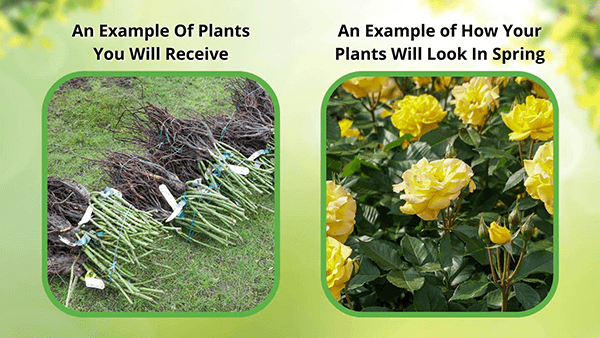
November 2025We sell bare root plants - click here to see what you'll receive
Overview
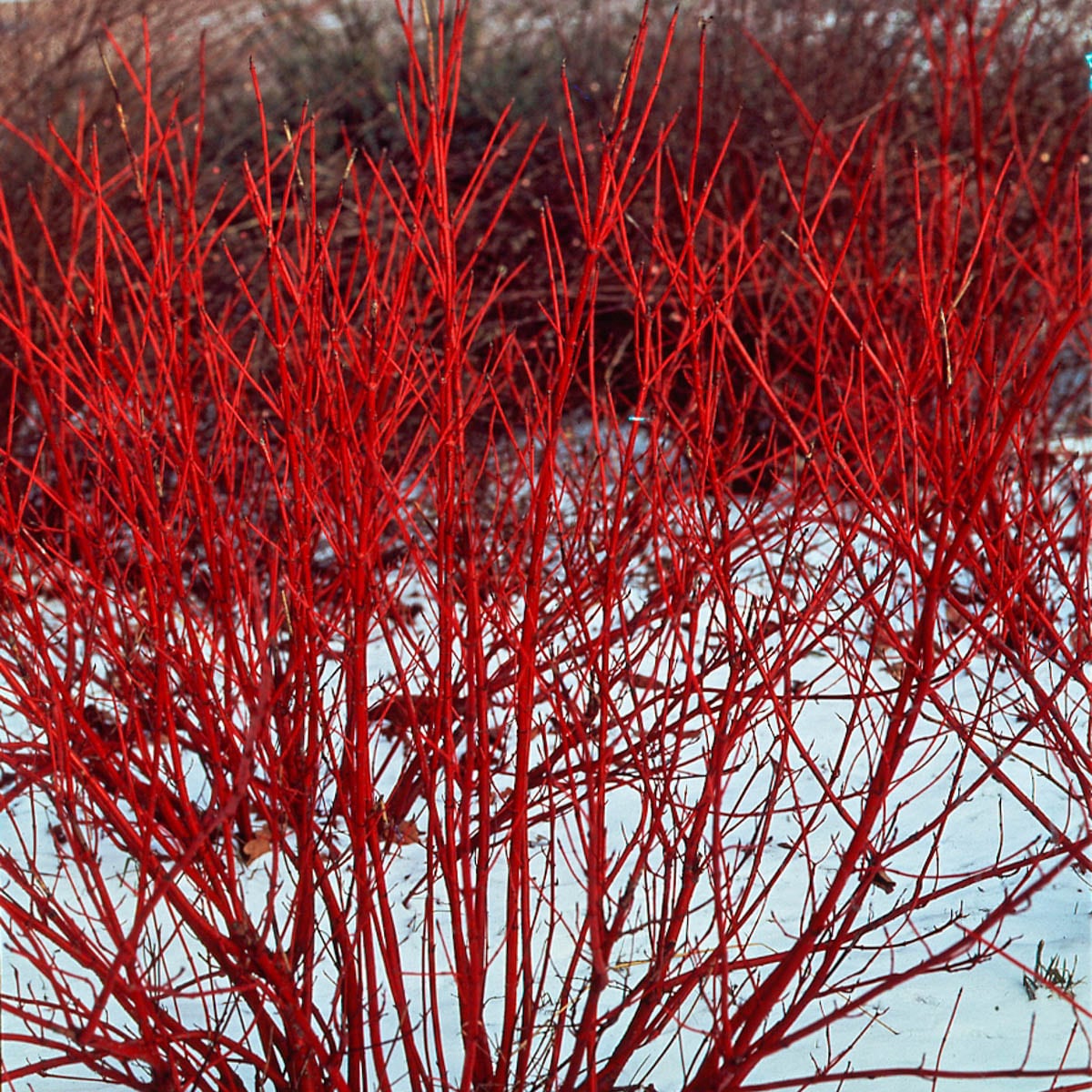
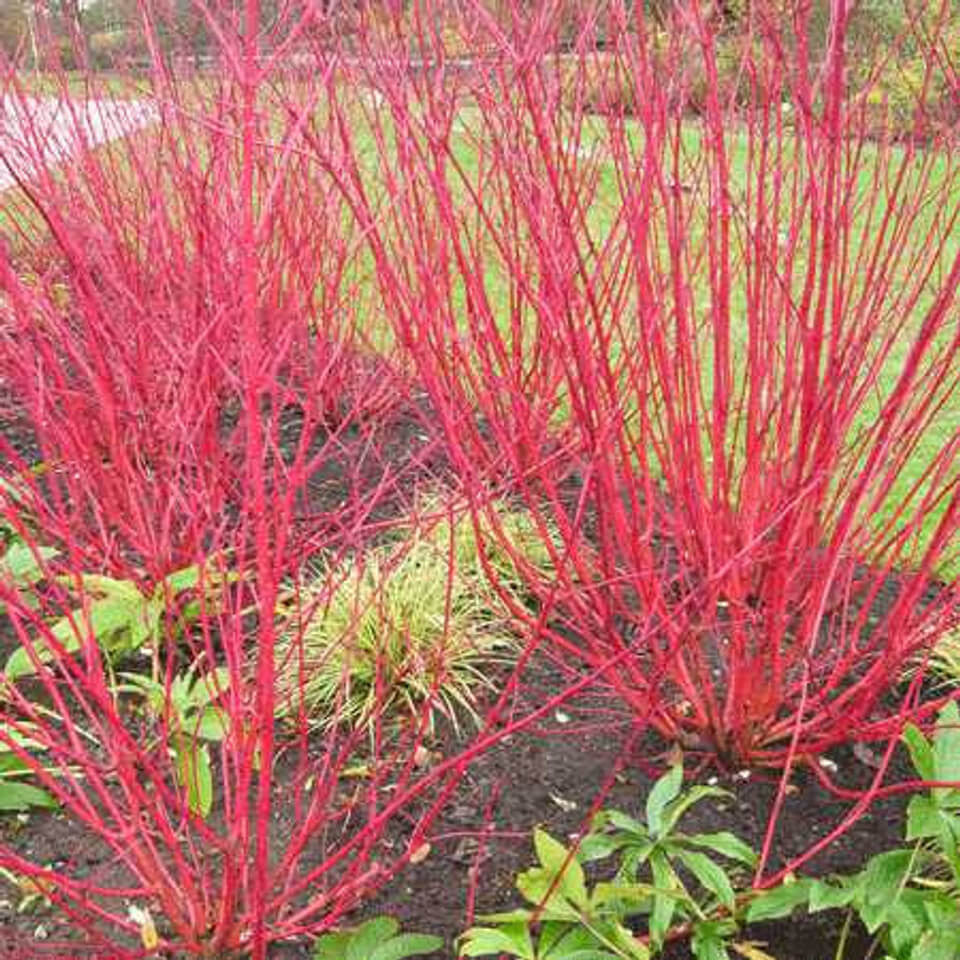
Red Osier Dogwood (Cornus sericea) earns its keep in the landscape year-round, but it's the winter show that gardeners really plant it for — bare stems that turn a deep, glossy red once the leaves drop, standing out against snow or dark mulch like nothing else in the yard. Add clusters of white spring blooms and a naturally sturdy, multi-stemmed habit, and you've got a shrub that pulls its weight from March through the coldest months of the year. It's a workhorse pick for anyone building out a best-selling landscape shrub lineup that needs more than one season of interest.
Planting Zone & Climate
Detail 1
Built for Cold Climates and Tough Sites
Detail 2
This is a genuinely tough, cold-hardy native, thriving anywhere from Zone 3 up through Zone 8 — which covers everything from the northern Great Plains and upper Midwest down into the mid-South. Red Osier Dogwood doesn't ask for pampering. It's commonly used along property lines, in mass plantings, on slopes for erosion control, or as an informal hedge, since its suckering habit means a single planting will fill in and form a thicket over time. If you're working with wet or seasonally soggy ground where other shrubs struggle, this is one of the few landscaping plants that actually prefers it — planting it near a low spot, drainage swale, or pond edge tends to produce the strongest colonies of stems.
Bloom Season & Appearance
The white flowers of late spring in flat-topped clusters make a pleasant contrast to the green leaves that have not yet begun to turn‚ and then there are the berries‚ which‚ unless the shrub is one of those merely a stem-color shrub‚ the birds will not leave for long․ It is‚ after all‚ a working piece of habitat․ If you want to plant it as part of a garden for wildlife‚ you may wish to consider the associated shrub and tree species that occur alongside it and could be used for landscaping (see how to attract birds to your garden with native plants)․
More About This Plant
Where and How to Use It
Care & Growing Tips
Detail 1
Red Osier Dogwood reads best in groups rather than as a single specimen — plant it in a loose row or drift where the winter stem color can really register from a distance, especially against evergreens or a plain fence line. It's a natural fit for rain gardens, buffer strips along creeks or ditches, and naturalized borders where a more manicured shrub would look out of place. Full sun brings out the most saturated red stem color, though it will tolerate a good amount of shade; just expect the color to soften a bit in lower light.
Detail 2
Maintenance mostly comes down to renewal pruning: because the brightest color shows on younger stems, cutting back a portion of the oldest wood each year (or the whole shrub every few years) keeps the color show going strong instead of fading into duller, woodier growth. Left alone, it will still perform, just with slightly less punch in the stem color over time. For gardeners assembling a broader native planting scheme, it pairs naturally with other cold-hardy shrubs and perennials discussed in our guide to crafting a graceful landscape with native plants .