


Natchez Crepe Myrtle
This plant ships:
November 2025We sell bare root plants - click here to see what you'll receive
Overview
Natchez Crepe Myrtle: The Gold Standard of Southern Landscaping
Planting Zone & Climate
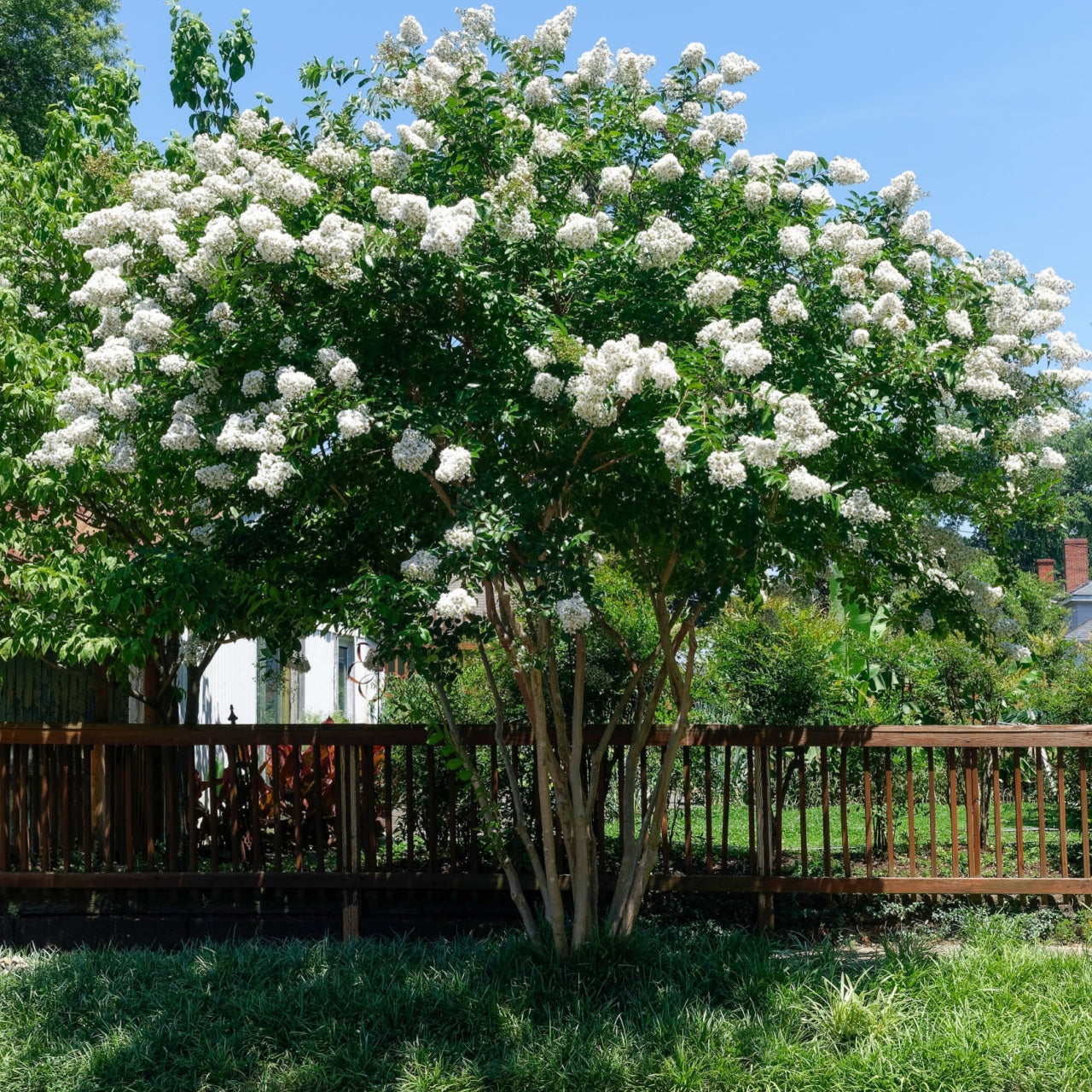
If you've driven past a Southern courtyard or estate garden and stopped to admire a tree with cinnamon-colored bark and clouds of white blooms, there's a good chance you were looking at a Natchez Crepe Myrtle. This cultivar is widely considered the finest of the crepe myrtle family, prized for its pure white flower clusters that appear in abundance and its exfoliating bark that peels away in patches of gray, tan, and cinnamon-brown, giving the trunk visual interest even after the leaves drop in fall. It thrives in USDA zones 6 to 9, making it a reliable choice across a wide swath of the country, from the mid-Atlantic down through the Gulf Coast.
Bloom Season & Appearance
Natchez earns its reputation as a landscaping workhorse. Plant it as a specimen tree near a patio or entryway where its bark can be appreciated up close, or line a driveway with several for a show-stopping summer display. Because it's so adaptable, it also works well as a background planting that anchors mixed borders or softens the corner of a house. Homeowners and landscapers alike reach for Natchez when they want a tree that delivers structure in winter, shade in summer, and a long season of bloom in between.
More About This Plant
What to Expect From This Tree
Bloom Season & Appearance (cont.)
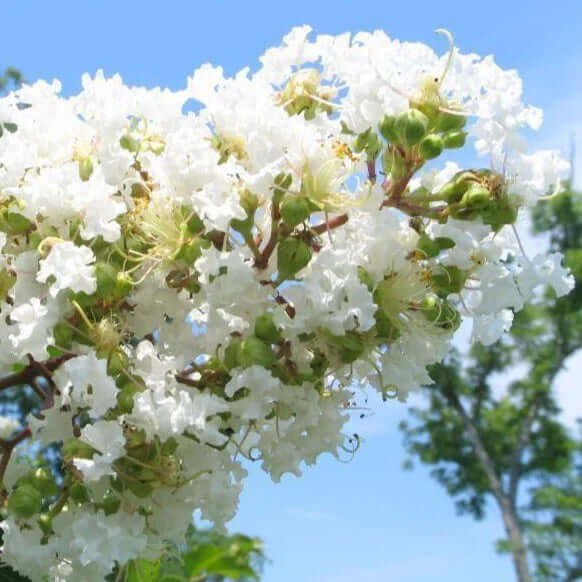
The flowers arrive in dense, showy panicles of crisp white blossoms that stand out against deep green foliage. Unlike many ornamentals that bloom and fade quickly, crepe myrtles are known for holding their color through the heat of summer, which is part of why they've become such a fixture in Southern landscaping. As the season turns, the foliage shifts to shades of orange and red before dropping to reveal that signature bark, so the tree earns its keep in more than one season.
Care & Growing Tips
Natchez is not a fussy tree once established. It handles heat, humidity, and the kind of long, dry summer stretches that make many ornamentals sulk. Full sun brings out the best bloom performance, and good air circulation around the canopy helps keep the foliage healthy. If you're planning a broader crepe myrtle planting and want to see how different varieties compare in color and habit, our post on crepe myrtles as a kaleidoscope of color in the garden is a good place to start, and the guide on landscaping with Muskogee Crepe Myrtle offers useful design ideas that apply just as well to Natchez, whether you're pairing it with lavender-toned varieties or letting it stand alone in white.
Additional Details
Where Natchez Fits in Your Garden
Care & Growing Tips (cont.)
Because it's classified for landscaping use, Natchez slots naturally into foundation plantings, privacy screens, and focal-point positions where a tree needs to look good from every angle. It pairs nicely with evergreen shrubs that give the garden year-round structure while the crepe myrtle handles the seasonal show, and gardeners often browse our best-selling plants collection to see what else is being planted alongside it right now. Give it well-draining soil, room to reach its mature spread, and a spot in full sun, and Natchez will reward you with one of the most dependable and photogenic trees available for zones 6 through 9.